2026-08-30 · Dale Whitfield
Why 100 Amp Service Cannot Keep Up With a Modern Central Alabama Summer
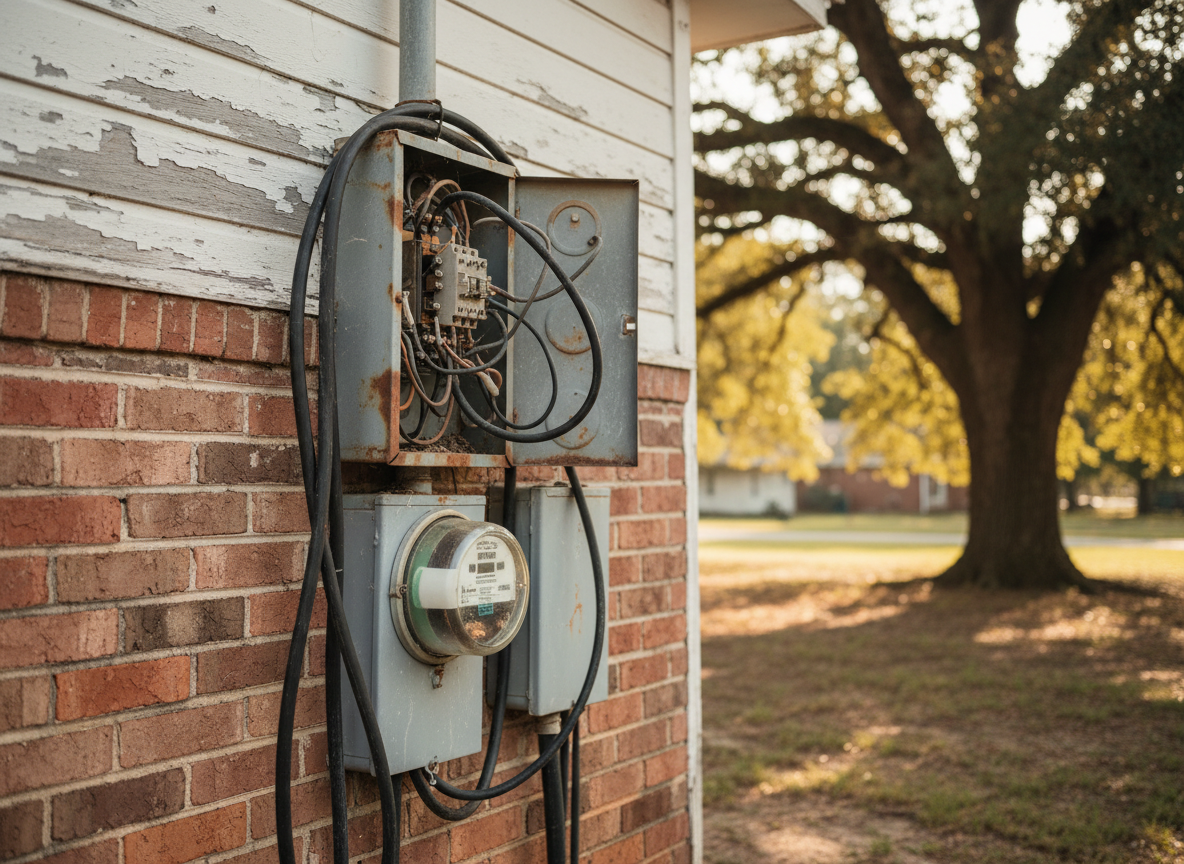
In Montgomery's humid subtropical climate, a 100 amp service cannot keep up with a modern Central Alabama summer because a single central air conditioner often pulls 25-35 amps at startup while the compressor and blower run continuously during 95-degree days, leaving insufficient headroom for refrigerators, water heaters, and lighting in homes built before the 1980s.
High Summer Loads from Central Air Conditioning
Homes in Capitol Heights and Dalraida frequently rely on 3-5 ton units that draw 20-30 running amps plus locked-rotor amps during startup surges. When outdoor temperatures stay above 90 degrees for weeks, these units cycle less and pull continuous current, quickly exceeding the 80 percent continuous-load rating on a 100 amp panel. Older homes in Eastdale often have original aluminum branch wiring that adds resistance and heat under sustained load. The result is tripped breakers or warm panels by mid-afternoon. Residents in Highland Gardens report the same pattern every July when humidity keeps compressors working harder than in drier parts of the state near Auburn.
Extra Draw from Everyday Appliances and Electronics
Modern households add 15-25 amps from electric water heaters, clothes dryers, and multiple window units used as backups. In Old Cloverdale, many two-story homes now include home offices with computers, monitors, and network equipment that stay powered 24 hours. These loads compound when family members work from home during the hottest part of the day. A 100 amp main breaker offers no reserve once the AC and dryer run together, forcing owners to choose which circuits to shut off. The situation worsens in neighborhoods where builders added square footage without upgrading the service entrance.
Humidity and Corrosion Effects on Panels and Wiring
Central Alabama's high humidity accelerates corrosion on outdoor panels and meter bases, raising resistance and reducing effective capacity over time. Humidity, Corrosion and Outdoor Panels: A Central Alabama Problem explains how moisture enters unsealed enclosures common on homes in McGehee Estates and along Vaughn Road. Corroded lugs create voltage drop that makes motors work harder and draw more current. Homeowners notice flickering lights or warm breaker handles long before total failure occurs. Regular visual checks of the panel exterior help catch these issues before they affect summer cooling reliability.
Signs Your 100 Amp Service Needs Attention
Frequent breaker trips during peak heat, flickering lights when the AC starts, or a panel that feels warm to the touch indicate the service is overloaded. In homes near the Alabama State Capitol or Rosa Parks Museum, many original panels date to the 1960s and were never designed for today's appliance count. Adding a second story or EV charger makes the shortfall obvious. An Electrical Panel Upgrade restores headroom by installing a 200 amp panel with modern breakers and proper grounding. Local electricians familiar with Montgomery's permitting process through the city inspections department can complete the work while keeping power interruptions short.
Planning an Upgrade Before Next Summer
Scheduling service work in late fall or early spring avoids the busiest months when demand for emergency calls rises. Homes in Chisholm and Wynlakes often require new service entrance cable and a larger meter base in addition to the panel itself. The process includes coordination with Alabama Power for the service drop and a final inspection. Owners who complete the upgrade report stable voltage and fewer interruptions even when temperatures exceed 95 degrees for consecutive days. A Residential Electrician can evaluate the existing load calculation and recommend the correct panel size based on the home's actual circuits rather than a one-size-fits-all approach.