2026-08-30 · Dale Whitfield
Aluminum Branch Wiring in 1960s and 1970s Montgomery Neighborhoods
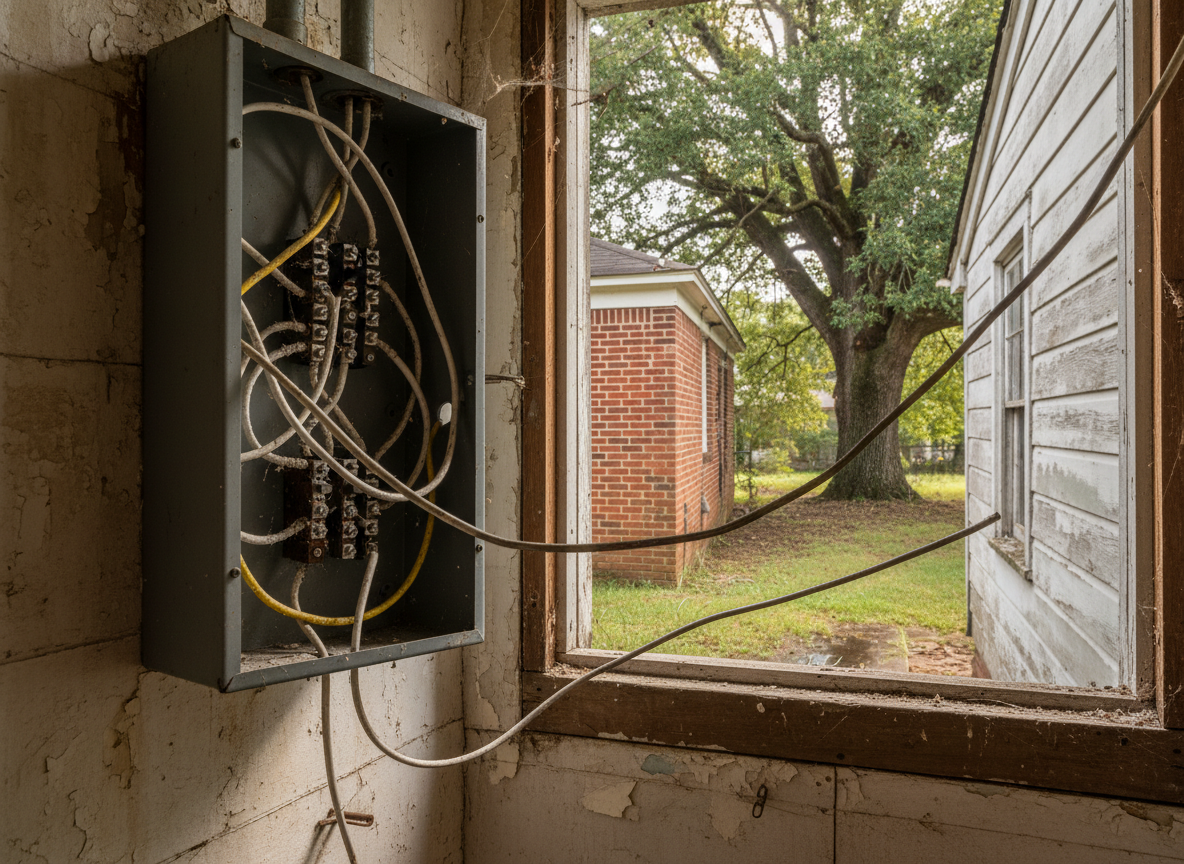
Homes built in Montgomery neighborhoods such as Capitol Heights, Old Cloverdale, Highland Gardens, Dalraida and Eastdale between 1960 and 1975 frequently contain aluminum branch wiring that now shows elevated failure rates at terminations after decades of service in the local humid subtropical climate.
Historical Context of Aluminum Wiring in Montgomery
During the 1960s and 1970s, builders in Montgomery County turned to aluminum conductors for branch circuits because copper prices rose sharply. Electricians installed single-strand aluminum wire in many new subdivisions around the Alabama State Capitol and near Riverfront Park. The practice lasted until revised codes restricted its use after reports of overheating at steel and brass terminals. In older housing stock typical of these areas, 15-amp and 20-amp circuits often ran from the main panel through walls to outlets and switches. Local climate patterns of repeated summer humidity cycles accelerated oxidation at every connection point compared with drier regions near Birmingham or Auburn.
Climate and Material Performance Factors
Montgomery's hot, humid summers cause aluminum to expand and contract more than copper, loosening screws at receptacles and switches over time. Soil conditions around Eastdale and Dalraida add minor ground moisture that can migrate into crawl spaces and increase corrosion on exposed wire ends. Homeowners in these neighborhoods report flickering lights and warm faceplates during peak July and August loads. These seasonal stresses differ from conditions in Tuscaloosa, where temperature swings are wider but humidity stays lower. Proper torque settings and antioxidant compounds become essential when servicing panels in this environment.
Identification Steps for Local Homeowners
Inspectors begin by removing cover plates on outlets installed before 1978 in Capitol Heights and Old Cloverdale homes. Aluminum wire appears silver-gray and is softer than copper; it also shows a distinct "CO/ALR" marking on compatible devices added later. Homeowners should avoid disturbing wires themselves and instead schedule an Electrical Safety Inspections visit. Documenting the panel type and counting aluminum circuits helps prioritize work. In many cases, only bedroom and living-room branches need attention while kitchen circuits were already copper.
Connection Failures and Safety Implications
The primary hazard arises where aluminum meets dissimilar metals without proper connectors, leading to high-resistance junctions that generate heat. In Dalraida and Highland Gardens homes, this has contributed to localized charring behind outlets during heavy air-conditioning use. The Montgomery Inspections Department requires permits for any re-termination work. Linking this issue to broader storm preparedness, residents can review Preparing Your Home Wiring for Alabama Tornado and Storm Season for additional context on how loose aluminum connections behave during power surges.
Remediation Approaches Used in Montgomery
Two accepted methods address aluminum branch wiring. The first involves pigtailing copper tails to aluminum runs using listed CO/ALR connectors or AlumiConn splices at every device. The second replaces entire circuits when walls are already open during renovations. Both approaches require updated permits through the city. Homeowners in Old Cloverdale often combine this work with House Rewiring projects when adding square footage. An Electrical Panel Upgrade frequently accompanies the job to ensure modern breakers protect the remaining aluminum runs. Each method restores safe operation without full demolition in most 1960s-1970s Montgomery properties.