2026-08-30 · Dale Whitfield
Humidity, Corrosion and Outdoor Panels: A Central Alabama Problem
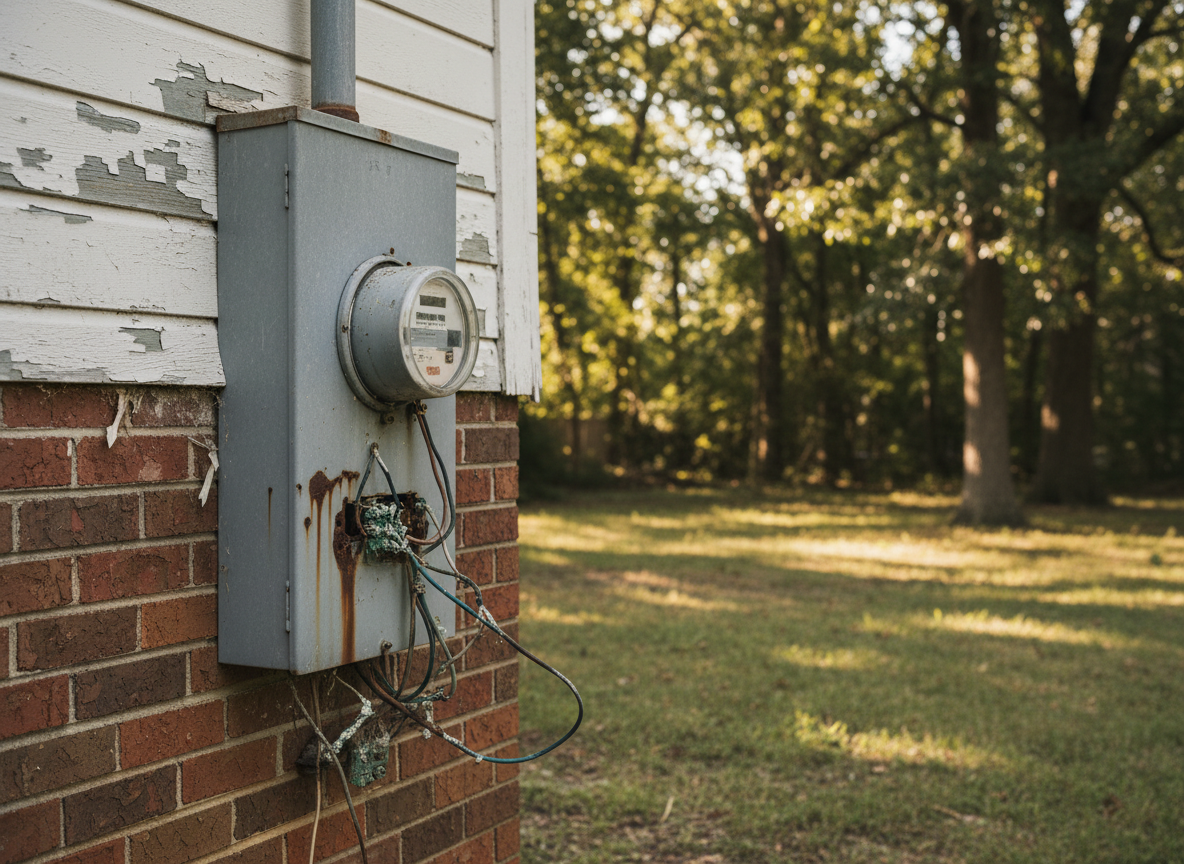
Central Alabama humidity corrodes outdoor electrical equipment through daily condensation cycles: moist air enters enclosures, condenses on cool metal overnight, and the repeated wetting corrodes busbars, lugs and breaker contacts. Carport panels, meter bases and exterior boxes fail this way years before their rated life.
The mechanism: condensation inside sealed looking boxes
An outdoor panel is weather resistant, not airtight. A NEMA 3R enclosure sheds rain, but it breathes with the air around it, and Montgomery air spends much of the year near saturation. Each night the enclosure's metal cools below the dew point, and the moisture in the air inside condenses on the coolest surfaces: the enclosure walls, the busbar, the breaker frames. Morning sun dries it; the next night repeats it. Hundreds of wet dry cycles a year, every year.
Corrosion follows the electricity. Dissimilar metals in contact, aluminum service conductors in plated lugs, copper pigtails on steel neutral bars, corrode galvanically wherever moisture bridges them. Terminals under electrical load corrode fastest, because current plus moisture accelerates the chemistry, and corrosion raises contact resistance, which makes heat, which drives more oxidation. The white bloom on aluminum lugs and green patina on copper are that process visible. Meanwhile plain rust works on the enclosure itself: hinge pins, dead front screws, and the bottom of the can where condensation pools and knockout holes let humid air rise in from below.
How to identify it before it fails
Look at your outdoor equipment twice a year, spring and fall:
- Rust streaks on the enclosure face or pooling stains below it
- White powdery bloom at lugs and terminals, or green on copper
- A door that grinds, or a rusted latch, both signs water has been at work inside too
- Breakers that feel stiff or gritty to switch
- Tripping that correlates with weather: a GFCI or breaker that trips on rainy or foggy mornings is telling you moisture is reaching something live
- At the meter base: rust at the bottom seam, or a hub seal at the top that has cracked with age, the top entry is where masts feed water straight in when seals fail
Inside the panel, an electrician looks for the stage you cannot see from the door: corrosion pitting on the bus where breakers clip on, sagging or stained insulation, and thermal discoloration where resistance has been making heat. A carport panel from the 1960s in Dalraida or Chisholm has been running this experiment for 60 years, which is why those panels dominate the corrosion failures we replace.
What to do about it
Prevention is cheap and specific. Keep enclosure penetrations sealed: proper fittings and sealant at cable entries, unused knockouts filled with listed plugs, the weatherhead and hub seals intact so the mast does not become a downspout. Keep drainage working: 3R enclosures have weep provisions at the bottom that must stay clear, because sealing the bottom traps water rather than excluding it. Where condensation is chronic, a small panel heater or replacing a badly located panel with one rated and sited for the exposure ends the cycle.
Repair follows the damage stage. Early surface corrosion at serviceable terminals can be cleaned and re terminated with anti oxidant compound and correct torque. Pitted busbars and heat marked connections are past maintenance; that panel gets replaced, because the bus is the panel. Catching the stage early is exactly what a whole home electrical safety inspection is for. And the safety line is the weather correlated symptom: a panel that trips, buzzes or smells after rain has moisture reaching live parts, and it needs an inspection now, not at the next convenient season.
FAQ
My outdoor panel is rusty outside but works fine. Is that a problem?
Exterior rust is the visible end of a process that is usually further along inside. It costs little to have the interior inspected, and the difference between cleaning terminals and replacing a pitted bus is the difference between a service call and a project.
Should outdoor panels be replaced with indoor ones?
When a renovation allows moving the panel indoors, it removes the exposure entirely and is worth considering. Otherwise a modern 3R panel, properly sealed and mounted out of direct roof runoff, handles Montgomery weather well.
Why does my GFCI trip every time it rains?
Moisture is reaching a protected conductor or device, often at an exterior box, buried splice or fixture whose gasket failed. The GFCI is doing its job; the leak it detects is what needs finding and fixing.