2026-08-30 · Dale Whitfield
Knob and Tube and Cloth Wiring in Cloverdale and Garden District Houses
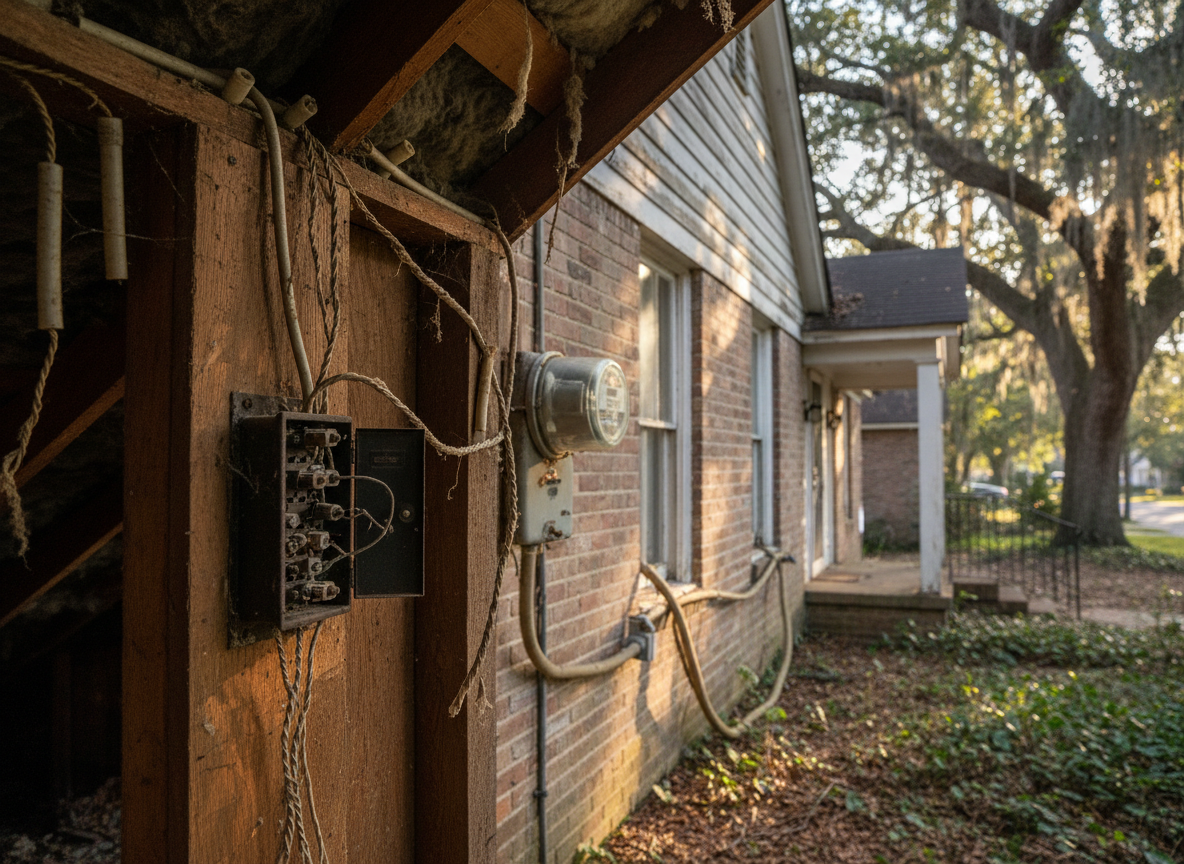
Knob and tube wiring in Cloverdale and Garden District houses from the 1920s through 1940s remains in place in many structures near the Alabama State Capitol and Rosa Parks Museum. Homeowners encounter this system when adding outlets or updating fixtures, and it typically requires full replacement rather than simple repairs because the rubber insulation has dried out over decades. Cloth wiring appears alongside it in the same homes, with fabric braiding that frays in Montgomery's hot, humid summers when attic temperatures exceed 100 degrees.
Recognizing Knob-and-Tube Systems in Cloverdale Houses
Knob and tube wiring runs through porcelain insulators mounted on joists with single conductors separated by several inches. In Old Cloverdale homes near Riverfront Park, electricians find this setup in walls and attics where original circuits still power lights but lack grounding. The system supports only 15-amp loads and uses no neutral return path, so any modern appliance draws create overheating at connections. Garden District properties show the same pattern in basements and crawl spaces where the ceramic knobs remain visible. Identification starts with checking for two-wire circuits that enter boxes without grounding conductors and ends with testing voltage drop on existing runs. Electricians avoid splicing new Romex directly to knob and tube because code requires isolation or complete removal. Homeowners in these neighborhoods often discover the wiring during ceiling fan installations or when adding circuits for window units during the long humid season.
Cloth-Insulated Wiring and Montgomery's Humid Summers
Cloth-covered wiring in Highland Gardens and Eastdale homes uses rubber insulation wrapped in cotton braid that absorbs moisture during Montgomery's frequent summer storms. The fabric wicks water toward connections, causing corrosion at terminals inside original metal boxes. High humidity levels above 70 percent for weeks at a time soften the rubber, allowing conductors to shift and create intermittent shorts. Dalraida houses from the same era show cloth wiring running through plaster walls that crack during temperature swings between 95-degree afternoons and cooler nights. Electricians trace these circuits by following the distinctive braided appearance in attics where insulation has settled. The material fails insulation resistance tests after 70 years, especially where it passes near plumbing lines that sweat in the subtropical climate. Replacement becomes necessary before any panel work because the old cloth cannot safely carry loads from modern refrigerators or air handlers common in Montgomery County.
Safety Risks Specific to Garden District Properties
Garden District homes near the Civil Rights Memorial carry elevated fire risk when knob and tube circuits remain active alongside cloth wiring that has lost its protective braid. Overloaded 15-amp lines heat up during peak summer usage when multiple window units run simultaneously. The lack of equipment grounding means any fault travels through the structure rather than tripping a breaker. Electricians document these conditions during inspections requested before real estate transactions in the neighborhood. Montgomery's red clay soils hold moisture that can migrate into crawl spaces and further degrade cloth insulation on floor joists. Homeowners notice warm outlet plates or flickering lights on older circuits first. These signs indicate the wiring has reached the end of safe service life in the local environment. Continued use without updates increases the chance of arcing faults that standard breakers do not detect.
Practical Steps for Homeowners
Start with a full electrical inspection that maps every knob and tube and cloth circuit in the home. The inspection identifies which runs can stay isolated and which must be removed before adding new loads. Many Cloverdale residents combine this step with panel upgrades when the original fuse box still serves the property. During rewiring projects, electricians pull new NM cable through existing paths where possible while preserving historic plaster in Garden District interiors. Homeowners should avoid DIY splices because improper connections between old and new wiring create hidden hazards. After replacement, whole-home surge protection helps guard the updated system against lightning common in central Alabama. Scheduling work during cooler months reduces attic heat stress on installers and allows better access before summer humidity returns.
Continuing Electrical Updates in Montgomery Neighborhoods
Once knob and tube and cloth wiring are addressed, many homeowners in Capitol Heights and Dalraida add dedicated circuits for high-draw appliances that the original systems could never support. Electricians recommend evaluating the entire service entrance during any major project because 60-amp panels from the same era limit future expansion. Linking the rewiring work to an electrical safety inspection provides documentation for insurance purposes in Montgomery County. Residents near Auburn and Tuscaloosa sometimes compare notes on similar housing stock, but local soil and humidity conditions in Montgomery create distinct challenges for insulation longevity. The process restores safe capacity while respecting the architectural character of these established neighborhoods.