2026-08-30 · Dale Whitfield
Whole Home Surge Protection and Why Central Alabama Sees So Many Surge Claims
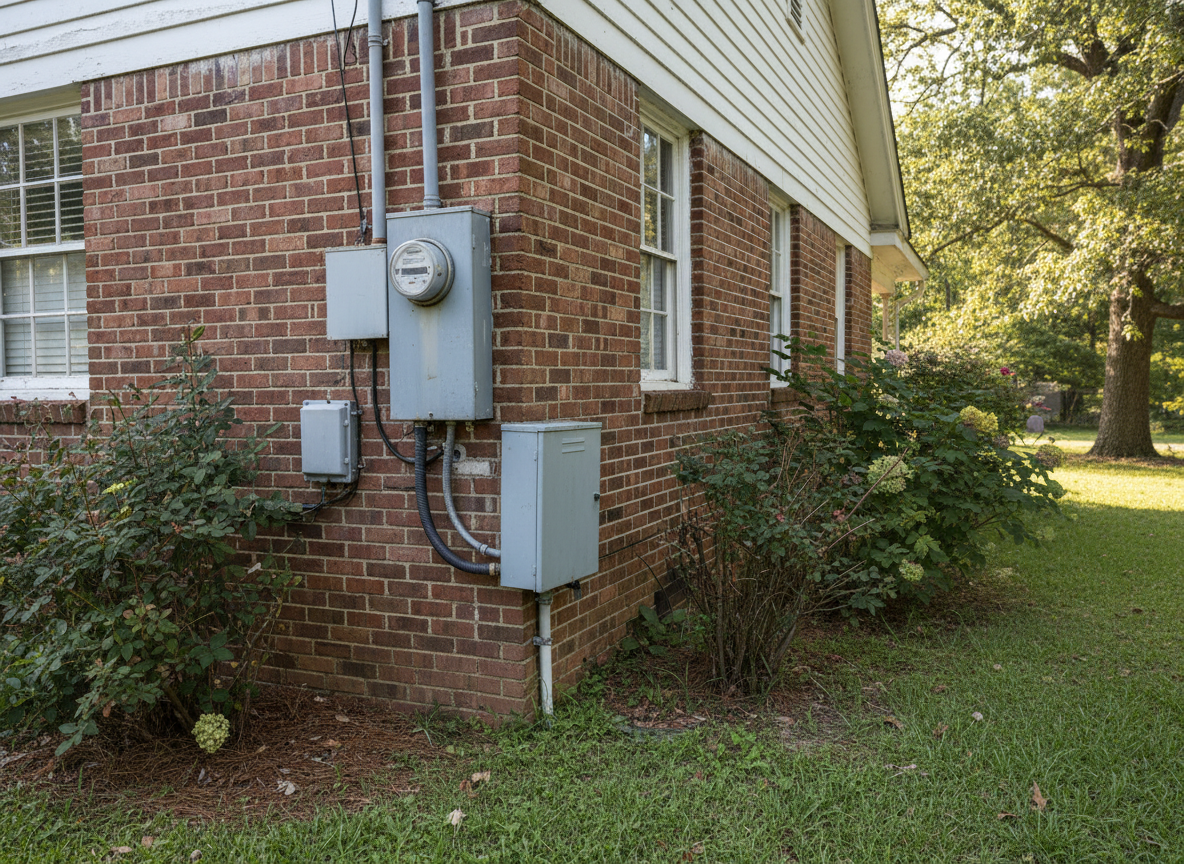
Central Alabama records dozens of thunderstorm days each summer, and those storms produce the majority of surge claims filed by homeowners in Montgomery. Whole home surge protection, when installed at the electrical panel, diverts high-voltage spikes before they reach branch circuits and sensitive appliances.
Why Central Alabama Records So Many Surge Claims
Montgomery sits in a humid subtropical climate where hot, humid air fuels afternoon and evening thunderstorms from May through September. These storms frequently produce cloud-to-ground lightning that strikes power lines or nearby trees, sending voltage spikes through the grid. Homes in Capitol Heights and Dalraida often sit on older overhead service drops that lack modern surge suppression, so the spikes reach panels and outlets intact. Nearby cities such as Birmingham and Tuscaloosa report similar patterns, but Montgomery's riverfront location adds extra humidity that keeps storms active longer into the evening. The result is repeated small surges that degrade electronics over time and occasional large surges that destroy HVAC boards, refrigerators, and televisions in a single event.
How Whole Home Surge Protection Limits Damage
A whole home device mounts directly at the main service panel and clamps voltage above 330–400 volts within nanoseconds. It handles surges up to 50,000 amps while leaving normal 120/240-volt power untouched. In older Montgomery homes that still use Federal Pacific Stab-Lok panels, the device must be paired with a panel upgrade to ensure proper termination and breaker compatibility. The protection covers every circuit downstream, including hard-wired appliances that point-of-use strips cannot reach. Homeowners in Eastdale and Highland Gardens who added this layer after repeated appliance failures report fewer service calls during the peak storm months.
Common Surge Sources Specific to Montgomery
Lightning is the most visible cause, yet utility switching and downed lines during heavy winds also create surges. The Alabama State Capitol and surrounding government buildings draw heavy electrical loads that can produce transient spikes when equipment cycles. Riverfront Park events and Montgomery Zoo operations add seasonal demand that stresses transformers. In neighborhoods such as Old Cloverdale, underground services installed decades ago can develop insulation weaknesses that allow surges to travel farther before dissipating. These local conditions explain why surge claims remain elevated even in years with average rainfall.
Installation Factors for Local Housing Stock
Most homes built before 1980 in Capitol Heights and Dalraida have 100-amp or 150-amp panels that lack dedicated surge breaker spaces. An upgrade to a 200-amp panel with a factory-installed surge module adds roughly $1,200–$2,100 depending on service wire size and meter base condition. Electricians must coordinate with the City of Montgomery Inspections Department for permits when the work involves service entrance changes. Properties near the Civil Rights Memorial or Rosa Parks Museum often sit on narrow lots, requiring careful placement of the new panel to maintain required clearances. The work typically takes four to six hours and restores power the same day.
Maintenance and Inspection After Installation
Surge modules carry indicator lights that turn red once the metal-oxide varistors have absorbed their rated energy. Annual visual checks during an electrical inspection catch failed units before the next storm season. Homes with generators or EV chargers benefit from additional point-of-use protection at those loads because whole-home devices do not cover every transient path. Residents in McGehee Estates and Wynlakes who schedule inspections before summer report fewer appliance replacements after the first few thunderstorm events.