2026-08-30 · Dale Whitfield
Why Breakers Trip When the AC Starts on a 95 Degree Montgomery Afternoon
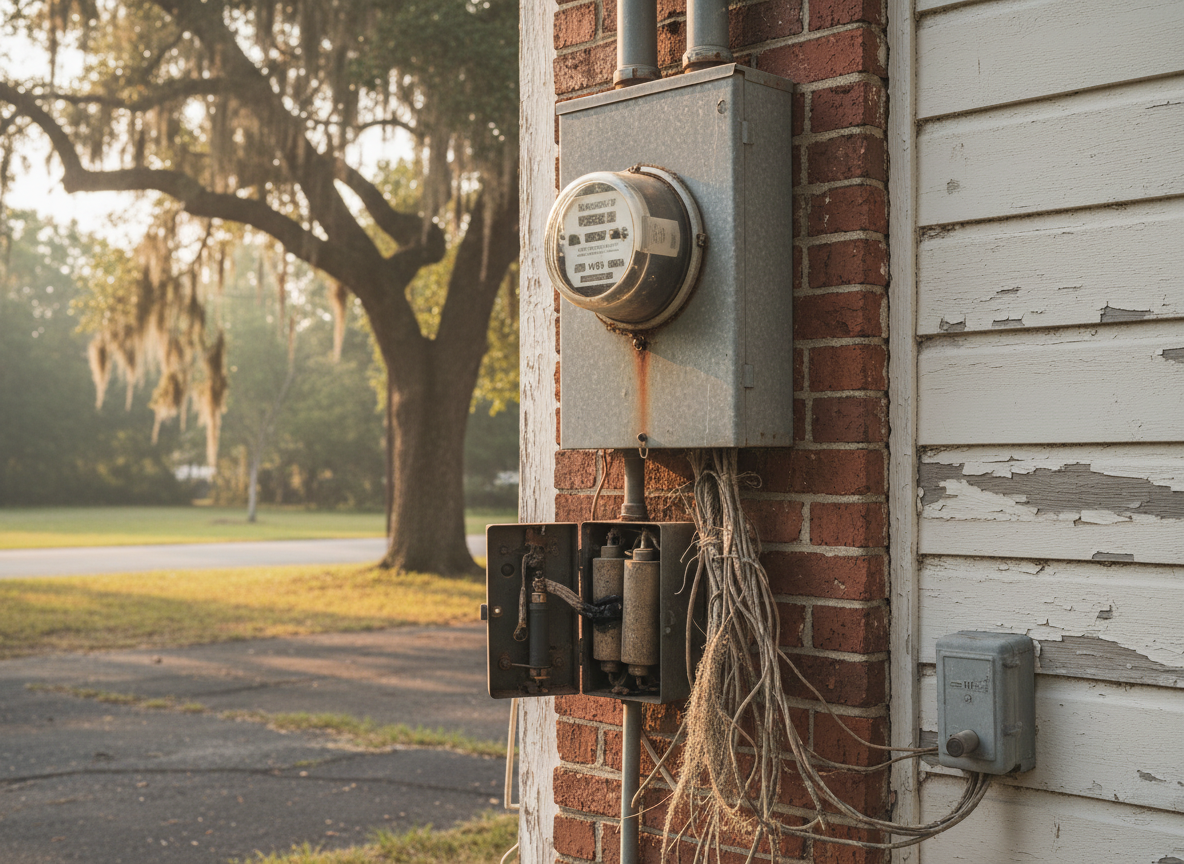
On a 95-degree afternoon in Montgomery, breakers trip because the AC compressor's inrush current spikes to 5-7 times its running amps, overwhelming a circuit already near capacity from the humid subtropical load. This surge lasts only a fraction of a second yet exceeds the breaker's instantaneous trip threshold when panels are 20-40 years old or rated at 100 amps.
How AC Startup Current Interacts with Montgomery Heat
Central air conditioners in Montgomery draw 15-25 running amps but surge to 80-120 amps at startup. Once afternoon temperatures hit 95 degrees and humidity climbs, the compressor works against higher head pressure, extending that surge and pushing marginal breakers over the edge. Homes in Capitol Heights and Dalraida often carry original 1960s-1980s panels that lack modern trip curves designed for inverter or high-efficiency units.
The county's clay-heavy soil and older slab foundations also mean many homes have long, undersized feeder runs that add voltage drop, making the surge appear even larger at the panel. When the AC cycles on during peak heat, the combination of elevated ambient temperature inside the electrical panel and the motor's locked-rotor amperage reliably trips the breaker.
Panel Age and Capacity Limits Common in Local Neighborhoods
Many homes in Old Cloverdale and Highland Gardens still operate on 100-amp or 125-amp services installed before central air became standard. These panels were sized for window units and electric ranges, not 3-5 ton heat pumps running 8-10 hours straight. When the AC starts, the main breaker or the dedicated 30- or 40-amp double-pole sees an instantaneous load that exceeds its rating even though steady-state draw stays within limits.
Aluminum branch wiring common in Eastdale homes from the 1970s adds another layer: connections loosen over decades of thermal cycling, raising resistance and heat at the breaker stab. The result is nuisance trips that appear only on the hottest afternoons when the AC runs longest.
Practical Checks Before Replacing the Breaker
- Verify the breaker is the correct amperage and type for the AC disconnect; mismatched breakers often fail to handle motor inrush.
- Measure voltage at the outdoor unit during startup; drops below 197 volts on a 240-volt circuit increase current draw and trip risk.
- Inspect the disconnect box and contactor for pitted points that add resistance during the surge.
- Confirm the indoor blower and outdoor fan start within 1-2 seconds of the compressor to avoid extended locked-rotor conditions.
These steps reveal whether the trip stems from normal inrush on an aging panel or from a developing fault that needs attention from an emergency electrician.
When an Electrical Panel Upgrade Becomes the Real Fix
If the home still has a 100-amp service and the AC, water heater, and dryer share circuits, the panel simply cannot absorb the simultaneous loads Montgomery summers demand. Upgrading to a 200-amp panel with a dedicated 40- or 50-amp AC breaker and properly sized conductors eliminates the trip without constant breaker resets. See the related discussion in Why 100 Amp Service Cannot Keep Up With a Modern Central Alabama Summer for load calculations typical in the area.