2026-08-30 · Dale Whitfield
What Your Panel Needs Before a Level 2 EV Charger Can Be Installed
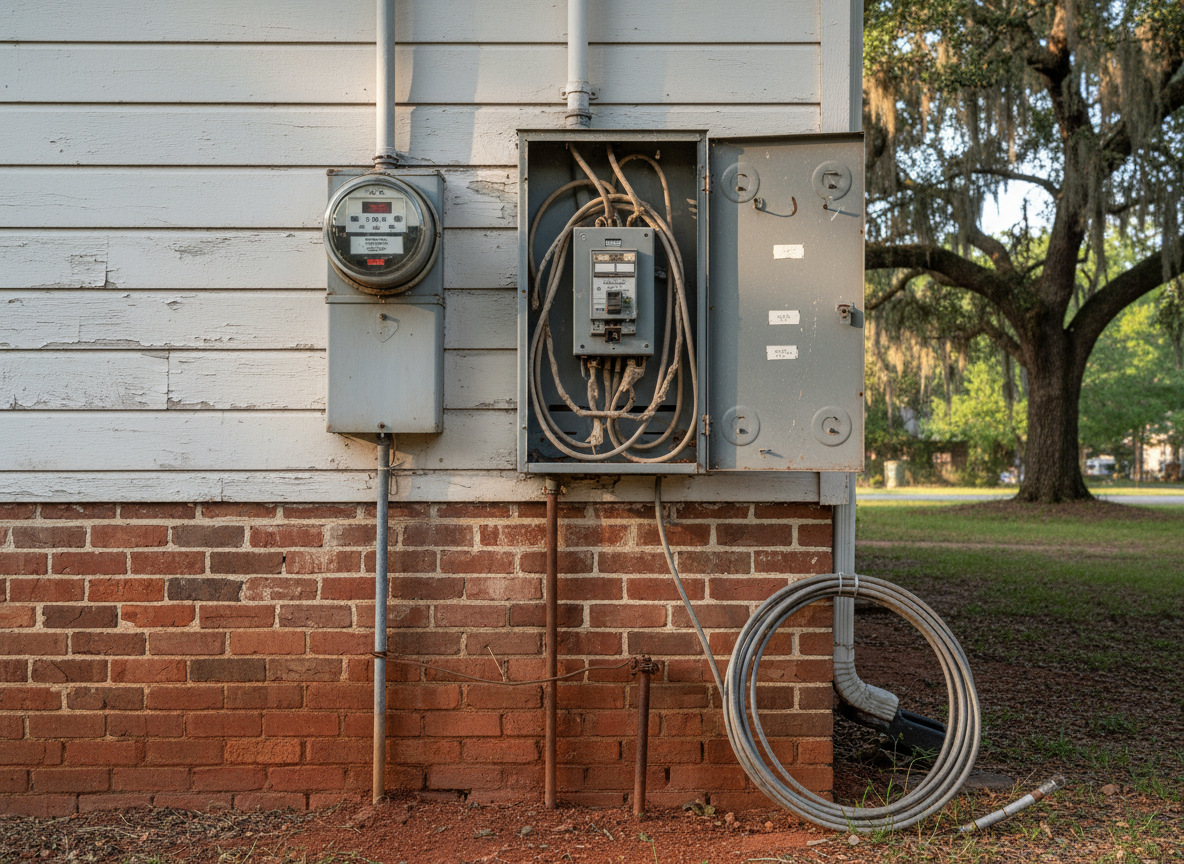
A Level 2 EV charger draws 30 to 50 amps continuously, so your panel must have an available 40- to 60-amp two-pole breaker space plus enough spare amperage after accounting for existing loads like air conditioning. In Montgomery's humid subtropical climate, summer AC units already push many 100-amp panels close to their limit, especially in homes built before 1980.
Checking Panel Age and Amperage in Montgomery Neighborhoods
Older homes in Old Cloverdale, Capitol Heights, and Highland Gardens frequently contain 100-amp or smaller panels that cannot support the added continuous load of a Level 2 charger without an upgrade. These panels were sized for the era's lower electrical demands and lack the headroom needed once modern appliances and high-efficiency heat pumps are factored in. A load calculation performed on site measures existing usage during peak summer conditions and determines whether the service can handle the charger without tripping or overheating. Many Dalraida and Eastdale residences from the 1960s and 1970s still have Federal Pacific or similar panels that electricians routinely flag during inspections. Federal Pacific Stab-Lok Panels in Older Montgomery Homes and How to Spot One explains identification steps for these units.
Required Breaker Space and Dedicated Circuit
Level 2 chargers need a dedicated two-pole breaker rated 125 percent of the charger's continuous draw, which translates to a 40-amp or 50-amp breaker for most residential units. Your panel must have two adjacent open slots on the bus bar and sufficient bus rating to accept the new breaker without exceeding 80 percent of total capacity. In practice, a 200-amp panel with 20 or more spaces usually works after a load study, while 100-amp panels in Eastdale rarely do. Electricians verify the main breaker rating, bus bar rating, and available spaces before quoting the job. Running the circuit in 6 AWG copper or 4 AWG aluminum from the panel to the charger location adds further constraints if the panel is already crowded.
When an Upgrade Becomes Necessary
If the existing panel is 100 amps or shows signs of prior overload during Montgomery's hot summers, an upgrade to 200 amps is the standard next step before the charger can be installed. This work includes replacing the panel, possibly the meter base, and running new service entrance conductors sized for the increased capacity. Homes in the Garden District and along Vaughn Road often need this step because original 60- or 100-amp services cannot accommodate both central air and an EV charger. The process also requires coordination with Alabama Power for any service drop changes. Electrical Panel Upgrade details the typical scope for these projects in Montgomery County.
Local Permitting Steps
Montgomery requires an electrical permit and inspection for any new 40-amp or larger circuit, including EV chargers. The City of Montgomery Inspections Department reviews the panel schedule, load calculation, and wiring plan before work begins. Homeowners in Capitol Heights and McGehee Estates commonly schedule this permit through their electrician to avoid delays. Final inspection confirms the breaker is properly labeled, the circuit is protected, and the installation meets current code. How the City of Montgomery Inspections Department Handles Electrical Permits outlines the exact sequence residents follow.
Practical Next Steps for Montgomery Homeowners
Schedule a panel assessment that includes a load calculation and visual inspection of the existing equipment. This visit identifies whether your service in areas such as Old Cloverdale or Dalraida already meets the 40- to 60-amp dedicated requirement or needs an upgrade. Once the panel is confirmed ready, the charger circuit can be installed and permitted without rework. The business is available 24 hours, 7 days for emergency panel evaluations when needed.